How to take your measurements at home for stitching
Ordering stitching without visiting the shop is easy once you can measure yourself. You need a soft measuring tape, a mirror, and ideally one other person to hold the tape. It takes about ten minutes.
All measurements here are in inches, which is what tailors in Pakistan use.
Before you start
- Wear light, fitted clothes, not a thick sweater
- Stand straight and relaxed. Do not hold your breath or pull your stomach in.
- Keep the tape flat and snug, not tight. You should be able to slide one finger under it.
- Write each number down as you go
- Measure twice. If the two numbers differ, measure a third time.
The easiest method: measure a suit that fits
If you own a kameez or shirt that fits you perfectly, lay it flat on a bed, button it, and measure the garment instead of your body. Tailors love this method because the fit you like is already built in. Just tell the tailor the numbers are from a garment, not your body.
Measurements for the kameez or shirt
- Length: from the highest point of the shoulder, beside the neck, straight down to where you want the hem
- Shoulder: across the back, from the edge of one shoulder to the edge of the other
- Chest or bust: around the fullest part, tape level all the way round
- Waist: around the narrowest part of your middle
- Hip: around the fullest part of your hips
- Sleeve length: from the shoulder edge to the wrist, with the arm slightly bent
- Armhole: around the top of the arm where it joins the shoulder
- Neck (collar): around the base of the neck, with one finger under the tape
- Cuff or sleeve opening: around the wrist, or wherever the sleeve will end
Measurements for shalwar or trouser
- Length: from the waist, where you tie the shalwar, down to the ankle bone
- Waist: where the trouser or shalwar will sit
- Hip: the fullest part
- Thigh: around the widest part of one thigh, for trousers
- Bottom (paincha): the width you want at the ankle
Extra points for ladies suits
- Upper bust, bust and under bust, for fitted suits
- Shoulder to bust point
- Front and back neck depth: from the base of the neck down to where the neckline should end
- Dart point, if your tailor asks for it
For fitted or bridal wear, it is still better to be measured by the tailor. See our bridal dress stitching guide.
Body measurement or finished measurement?
This is the most common confusion. Your chest may measure 40 inches, but a comfortable kameez will be a few inches larger than that. Always tell the tailor which one you are giving:
- "These are my body measurements, please add ease for a regular fit", or
- "These are measurements of a suit that fits me, please copy them"
Common mistakes
- Pulling the tape too tight
- Measuring over thick clothes
- Letting the tape drop at the back when measuring the chest
- Measuring sleeve length with the arm perfectly straight
- Rounding numbers up "to be safe"
Sending measurements with your order
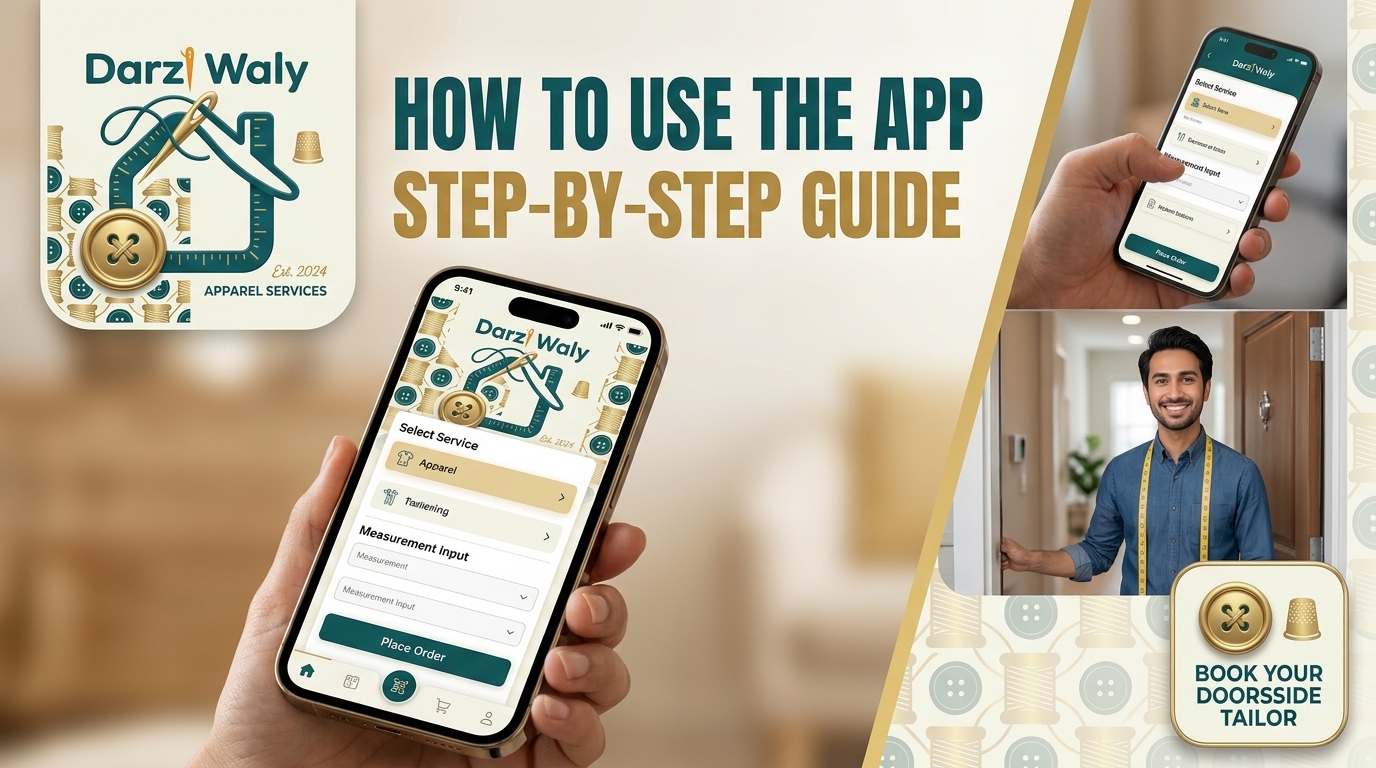
In the Darzi Waly app every measurement field is optional. Fill in what you know and leave the rest, add notes for the tailor, or skip measurements completely and send a sample suit. You can also save your measurements once and reuse them for your next order.
Not sure about the style choices yet? Read the shalwar kameez stitching guide or the guide to ladies suit stitching.