Bridal dress stitching: a timeline and checklist for brides
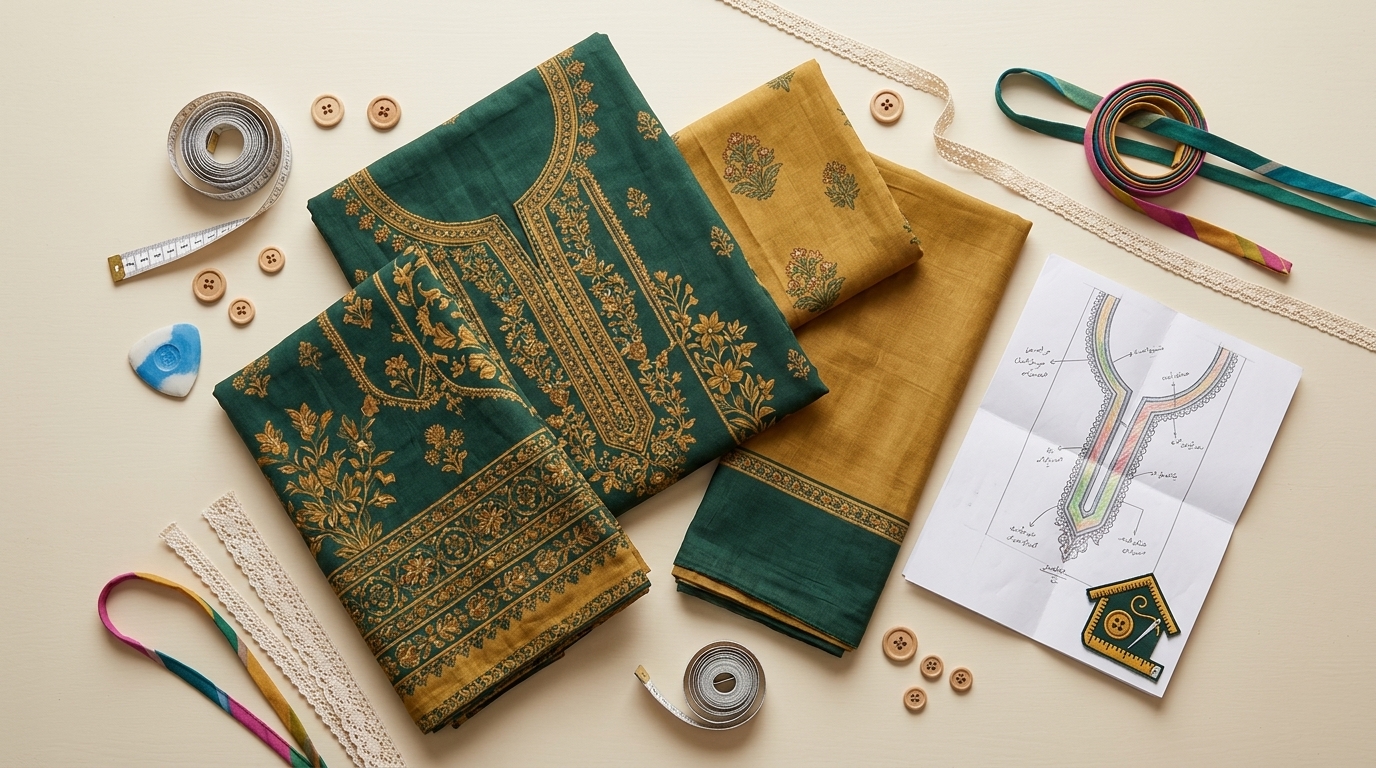
Every other suit can be a few days late. The bridal dress cannot. That is why bridal dress stitching needs more planning than any other order, and a tailor chosen with more care.
Here is a plan that keeps the stress out of it.
Start earlier than you think
Bridal work has more steps than ordinary stitching: the design, the embroidery or handwork, the stitching itself, fittings and final finishing. Each step can slip.
A safe plan looks like this:
- Three months before: choose the design and the tailor
- Ten to twelve weeks before: hand over the cloth and confirm the measurements
- Four to six weeks before: first fitting
- Two weeks before: final fitting
- One week before: dress at home, pressed and ready
If your wedding is in the winter season, when most weddings in Pakistan happen, add extra time. Good bridal tailors are busiest then.
Know your dress type
- Lehenga choli: skirt, blouse and dupatta. The fit of the blouse is everything.
- Maxi or gown: one long piece, needs careful work at the bust and waist.
- Sharara or gharara: flared trousers with a short or long shirt.
- Long shirt with lehenga: traditional and forgiving in fit.
Each needs a tailor who has made that type before. Ask to see one.
Choosing a bridal tailor
Bridal stitching is a speciality. When you look at a tailor's work, check:
- photos of bridal dresses she has actually finished, not pictures from the internet
- how heavy embroidered cloth is handled at the seams
- whether the dress is fully lined and the inside is clean
- reviews from other brides, especially about delivery on time
Ask directly: "How many bridal dresses do you take in one month?" A tailor who takes too many will be rushing yours.
Embroidery and handwork
If your cloth is already embroidered, the tailor must cut it so the work sits in the right place. If the handwork is still to be done, it usually happens before stitching and takes the most time of all. Confirm:
- who does the handwork
- what it costs, separately from stitching
- the date the handwork will be finished
Measurements and weight
Many brides lose or gain a little weight before the wedding. Tell your tailor. A sensible tailor leaves extra cloth inside the seams so the dress can be adjusted at the final fitting. This is the reason the final fitting should be close to the wedding, but not so close that there is no time to fix anything.
Wear the shoes and the undergarments you will wear on the day to every fitting. Heel height changes the length of a lehenga by inches.
What to try at the final fitting
- Sit down, stand up and walk in the dress
- Raise your arms as if greeting guests
- Check the dupatta sits where you want it and is not too heavy
- Check every hook, zip and tie works easily
Get the agreement clear
Before you hand over the cloth, agree in writing or in a message:
- the total price and what it includes
- the dates of each fitting and the final delivery
- what happens if a change is needed
Do not forget the other dresses
Mehndi, barat, walima, and often the mothers' and sisters' suits as well. Ordering them from the same tailor at the same time is rarely wise. Split the work so that no single tailor is carrying your whole wedding.
Finding tailors near you
On Darzi Waly you can browse ladies tailors near you in Lahore, look at photos of their work, read reviews and see their prices before you get in touch. For party and formal suits around the wedding, see ladies suit stitching and designer cuts, and for choosing a tailor in general, ladies tailor near me.